Launching a successful online sports equipment store in 2026 starts with identifying a profitable niche and sourcing high-demand products from reliable suppliers. Build a user-friendly, mobile-optimized e-commerce site with secure payment options and fast shipping to stand out in a competitive market. Combine smart digital marketing—like SEO, influencer partnerships, and social media—with excellent customer service to drive traffic and build brand loyalty fast.
How to Start an Online Sports Equipment Store in 2026
Key Takeaways
- Choose a niche: Focus on a specific sport or equipment type to stand out.
- Research suppliers: Partner with reliable, cost-effective manufacturers or distributors.
- Build a user-friendly website: Ensure fast loading, mobile optimization, and secure checkout.
- Leverage SEO and content: Rank higher with targeted keywords and helpful blog content.
- Utilize social proof: Showcase reviews and testimonials to build customer trust.
- Offer excellent customer service: Provide fast support and hassle-free returns.
- Scale with data: Analyze sales and traffic to refine marketing and inventory.
Why This Matters / Understanding the Problem
Let’s be honest: the world of sports is booming. Whether it’s weekend warriors hitting the pickleball courts or parents kitting out their kids for soccer season, demand for quality sports gear is only going up. But here’s the thing — starting an online sports equipment store in 2026 isn’t just about slapping up a website and waiting for orders.
I learned this the hard way. A few years ago, I tried launching a niche fitness store with zero planning. I picked a name, bought some inventory, and built a Shopify site in a weekend. It flopped. No traffic. No sales. Just a lesson in what not to do.
The reality? Today’s market is crowded. Amazon dominates, niche brands are everywhere, and customers expect fast shipping, easy returns, and authentic reviews. But that doesn’t mean there’s no room for you. In fact, how to start an online sports equipment store in 2026 is less about competing head-on with giants and more about finding your lane — your community, your specialty, your story.
Whether you’re passionate about trail running, pickleball, or youth basketball, there’s a space for you. The key is doing it strategically, with a plan that accounts for logistics, branding, and customer trust. And that’s exactly what we’re going to walk through — step by step.
What You Need
Before you dive in, let’s get real about what it takes. You don’t need a million-dollar warehouse or a team of 10. But you do need the right tools, mindset, and a few key resources.
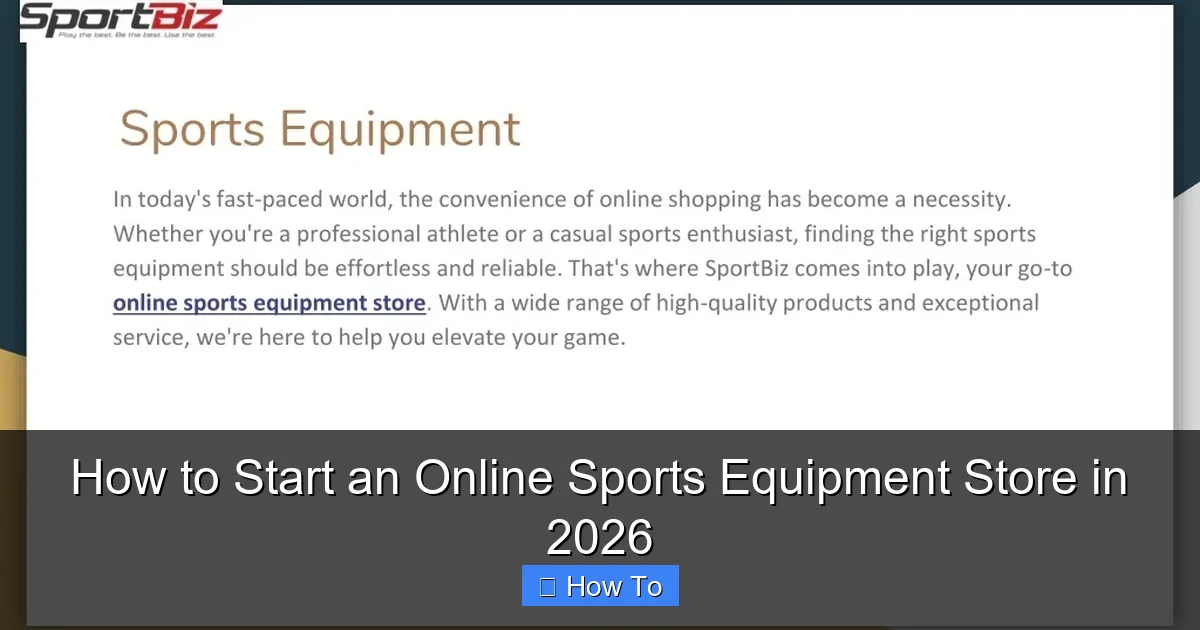
Visual guide about how to start an online sports equipment store
Image source: image7.slideserve.com
- Business Plan: Even a one-page version helps. Outline your niche, target market, and revenue model.
- E-commerce Platform: Shopify, BigCommerce, or WooCommerce (WordPress + WooCommerce plugin). I recommend Shopify for beginners — it’s user-friendly and scales well.
- Domain Name & Hosting: Your store’s address on the web. Use a name that’s short, memorable, and related to your niche (e.g., TrailPulseGear.com).
- Supplier or Dropshipping Partner: Decide whether you’ll hold inventory (more control, higher risk) or use dropshipping (less risk, lower margins).
- Payment Processing: Stripe, PayPal, or Square. Make sure it’s PCI-compliant.
- Shipping & Fulfillment Tools: Shippo, Easyship, or ShipStation for label printing and tracking.
- Legal & Compliance: Business license, EIN (U.S.), sales tax registration, and a solid privacy policy.
- Marketing Tools: Email platform (Mailchimp, Klaviyo), social media accounts, and SEO-friendly content.
- Camera or Smartphone: For product photos and video content. Good lighting matters more than fancy gear.
Pro Insight: Start lean. Use free trials, open-source tools, and pre-made templates. You don’t need a $500 logo or a custom-built site on day one. Focus on validating your idea first.
Now, let’s get into the real meat: how to start an online sports equipment store in 2026, from idea to launch.
Step-by-Step Guide to How to Start an Online Sports Equipment Store in 2026
Step 1: Choose Your Niche (And Stick to It)
Here’s a mistake I see all the time: people try to sell “everything sports.” Bad idea. You’re not Amazon. You’re a new brand trying to stand out.
Instead, pick a niche. Not just a sport — a specific audience within that sport.
- Trail runners who love ultralight gear
- Pickleball players over 50 who want joint-friendly paddles
- Parents buying youth soccer equipment on a budget
- Yoga enthusiasts who prefer eco-friendly mats
Why does this matter? Because niches let you:
- Speak directly to a community
- Rank for specific search terms (SEO gold)
- Build trust faster
- Partner with micro-influencers
Real Talk: I once tried to sell both golf and tennis gear. Zero traction. Then I narrowed to women’s beginner tennis. Sales picked up in 6 weeks. Niche = focus = results.
So ask yourself: Who am I serving? What problem do I solve for them? That’s your niche.
Step 2: Research Your Market & Validate Demand
Don’t assume people will buy. Prove it.
Start with keyword research. Use tools like:
- Google Keyword Planner (free)
- Ubersuggest
- AnswerThePublic
Search terms like:
- “best trail running shoes for flat feet”
- “durable pickleball paddles under $100”
- “youth soccer cleats wide feet”
Look for:
- Monthly search volume (aim for 500+)
- Low to medium competition
- Commercial intent (people ready to buy)
Then, check competitors. Use Google, Amazon, and Instagram. Ask:
- Who’s selling this?
- What are their prices?
- What do reviews say about quality, shipping, customer service?
Finally, validate demand with real people. Join Facebook groups, Reddit threads, or local sports clubs. Post: “I’m thinking of launching a store for [niche]. What’s your biggest pain point when buying gear?”
Warning: Don’t launch without validation. I skipped this step once and ended up with 50 unsold yoga mats. Ouch.
Step 3: Pick Your Business Model
There are three main ways to run your store:
- Inventory-Based (You Own Stock): Buy products in bulk. Higher profit margins, but more risk and upfront cost.
- Dropshipping (You Don’t Hold Stock): When a customer orders, the supplier ships directly. Lower risk, but lower margins and less control.
- Hybrid (Mix of Both): Keep bestsellers in stock, dropship the rest. Best of both worlds — but more complex.
For how to start an online sports equipment store in 2026, I recommend starting with dropshipping or a hybrid model. Why?
- Sports equipment is bulky — storage and shipping costs add up fast.
- You can test 10 products without buying 100 units.
- You’ll learn what sells before investing heavily.
Where to find suppliers?
- AliExpress (for dropshipping — but check shipping times)
- Spocket (U.S./EU-based suppliers, faster shipping)
- Inventory Source (connects to 100+ suppliers)
- Direct Brands (contact manufacturers — some allow dropshipping)
Pro Tip: Order samples. I once listed a “premium” resistance band set that snapped on first use. Test everything.
Step 4: Register Your Business & Handle Legal Stuff
Don’t skip this. It’s boring, but it protects you.
Steps:
- Choose a Business Structure: Sole proprietorship (easiest), LLC (best for protection).
- Register Your Business Name: Check availability with your state (U.S.) or local authority.
- Get an EIN (U.S.): Free from the IRS. Needed for taxes and bank accounts.
- Open a Business Bank Account: Keeps your personal and business money separate.
- Register for Sales Tax: If you sell in states with sales tax, you must collect and remit it. Use Avalara or TaxJar to automate.
- Get Necessary Licenses: Some states require a general business license or resale permit.
Also, set up legal pages on your site:
- Privacy Policy (required by law)
- Terms of Service
- Return Policy (clear and fair)
Use free templates from Shopify or Termly.io, but customize them to fit your business.
Real Talk: I once ignored sales tax for 6 months. Then got a $3,000 bill. Don’t be me. Automate tax from day one.
Step 5: Build Your Online Store
Now the fun part — building your site.
I recommend Shopify for beginners. It’s:
- Easy to use (drag-and-drop)
- SEO-friendly
- Integrates with suppliers and shipping tools
- Mobile-optimized (critical — 70% of shoppers use phones)
Steps to set up:
- Sign up for Shopify (14-day free trial).
- Choose a Theme: Free ones like “Dawn” or “Symmetry” work great. Pick one with good mobile design.
- Customize Your Store:
- Logo (use Canva for a simple, professional look)
- Colors and fonts (keep it clean and sporty)
- Homepage: Clear headline, featured products, testimonials
- Add Products:
- High-quality photos (use natural light)
- Detailed descriptions (include size, weight, materials, use cases)
- Clear pricing and “Add to Cart” button
- Set Up Payment & Shipping:
- Enable Stripe and PayPal
- Configure shipping rates (free over $50? flat rate?)
- Connect to Shippo or Easyship for label printing
- Install Apps:
- Oberlo (for dropshipping)
- Loox (for photo reviews)
- Smile (for loyalty rewards)
Test your store thoroughly:
- Place a test order
- Check mobile and desktop views
- Make sure links work and load fast
Pro Tip: Use a “Coming Soon” page with an email signup before launch. Build anticipation and collect early leads.
Step 6: Source & List Your First Products
Now, pick 5–10 products to start with. Use your market research to guide you.
When sourcing:
- Look for products with 4+ star reviews (on supplier sites)
- Check shipping times (aim for under 14 days)
- Compare prices — can you mark up 2–3x?
- Ensure product images are high-res and professional
For listings, focus on:
- SEO-Friendly Titles: “Men’s Trail Running Shoes – Lightweight, Waterproof, for Rough Terrain”
- Bullet Points: Highlight benefits, not just features
- Product Videos: 30-second clips showing the gear in use (use your phone)
- FAQ Section: “Are these shoes good for wide feet?” “Do they come in half sizes?”
And here’s a secret: use UGC (user-generated content). Ask early customers to send photos or videos using your gear. Post them on product pages and social media. Authentic content converts better than stock photos.
Step 7: Set Up Marketing & Launch Strategy
You’ve built the store. Now, get people to visit it.
Start with these channels:
- SEO (Long-Term): Blog about topics like “Best Pickleball Paddles for Seniors” or “How to Choose Trail Running Shoes.” Target keywords with commercial intent.
- Email Marketing: Use a welcome series. Offer 10% off first order. Segment by interest (e.g., runners vs. cyclists).
- Social Media: Focus on 1–2 platforms. Instagram and TikTok are great for sports content. Post:
- Product demos
- Customer stories
- Behind-the-scenes (packing orders, testing gear)
- Paid Ads (Short-Term Boost): Start small. Run a $10/day Facebook ad to a blog post or product. Retarget visitors.
- Partnerships: Collaborate with micro-influencers (1K–10K followers). Offer free gear for honest reviews.
For launch:
- Create a “Launch Offer” (e.g., 20% off first 100 orders)
- Email your waitlist
- Post on Reddit, Facebook groups, and local sports forums
- Run a giveaway: “Tag 2 friends for a chance to win a $50 gift card”
Real Talk: I launched without a plan and got 12 visitors in a week. Then I ran a giveaway and got 500. Marketing matters — a lot.
Step 8: Handle Orders, Shipping & Customer Service
You’ve got your first sale! Now, deliver a great experience.
Steps:
- Process Orders Fast: Use your fulfillment tool (Shippo, etc.) to print labels and notify customers.
- Send Tracking Info: Automate this with Shopify apps. Include a thank-you note.
- Respond to Messages: Use a helpdesk (Gorgias or Zendesk) to manage emails and chat. Reply within 24 hours.
- Handle Returns: Be fair. Most customers just want a hassle-free return. Offer store credit if you can.
And here’s a game-changer: ask for reviews. Use Loox or Judge.me to send automated emails after delivery. Offer a small discount for a photo review.
Pro Tip: Include a handwritten note in orders. I started doing this and got 5-star reviews that mentioned it. Little things build loyalty.
Pro Tips & Common Mistakes to Avoid
After helping dozens of friends launch stores, here’s what I’ve learned:
- Don’t Over-Expand Too Soon: Start with 5–10 products. Master them. Then add more.
- Don’t Ignore SEO: It takes time, but it’s free traffic. Blog consistently.
- Don’t Skip Testing: Order samples. Test shipping times. Check product quality.
- Don’t Underprice: You’re not competing on price alone. Focus on value, service, and community.
- Don’t Neglect Customer Service: One bad review can hurt. One great experience can bring 5 new customers.
My Biggest Mistake: I once listed a “waterproof” jacket that leaked. Instead of hiding it, I emailed every customer, sent a free replacement, and updated the listing. Sales actually increased. Transparency builds trust.
Also, track your metrics:
- Conversion rate (aim for 2–3%)
- Average order value (boost with bundles)
- Customer acquisition cost (CAC)
- Return rate (keep under 10%)
FAQs About How to Start an Online Sports Equipment Store in 2026
Q: Do I need a lot of money to start?
A: Not at all. You can start for under $500 using dropshipping, a free Shopify trial, and organic marketing. I launched my first store with $300. Focus on validating your idea first — not spending.
Q: How do I compete with Amazon?
A: You don’t. Amazon wins on price and speed. You win on community, expertise, and service. Be the go-to expert for your niche. Offer free guides, personalized recommendations, and fast, friendly support.
Q: What’s the best platform for my store?
A: Shopify is my top pick for beginners. It’s reliable, scalable, and has great apps. WooCommerce (on WordPress) is powerful but needs more tech know-how. BigCommerce is good for larger stores.
Q: How do I find reliable suppliers?
A: Order samples. Check reviews. Use platforms like Spocket or Inventory Source that vet suppliers. And never rely on just one — have backups in case of stock issues.
Q: Should I hold inventory or dropship?
A: Start with dropshipping to test demand. If a product sells 10+ units/month, consider stocking it. Holding inventory gives faster shipping and better margins — but more risk.
Q: How long until I make money?
A: It varies. Some stores see sales in 2 weeks. Others take 3–6 months. Focus on learning, improving, and building trust. Profit comes with persistence.
Q: How do I handle shipping delays?
A: Be transparent. Email customers early. Offer partial refunds or store credit. And choose suppliers with reliable shipping times — even if they cost a bit more.
Final Thoughts
Starting an online sports equipment store in 2026 isn’t about being perfect — it’s about being persistent.
You’ll make mistakes. Your first product might flop. Your shipping might get delayed. But every challenge is a chance to learn, improve, and connect with your customers.
Remember: how to start an online sports equipment store in 2026 is a journey. It’s not a one-time event. It’s about:
- Finding your niche and owning it
- Building a brand, not just a store
- Delivering real value — not just products
- Listening to your customers and adapting
So take that first step. Pick your niche. Build your site. Launch with confidence. And when you get that first sale, celebrate — because you’re not just selling gear. You’re helping people do what they love.
Now go out there and build something awesome.