Most sporting goods stores do not sell suppressors due to strict federal regulations. While some specialized retailers may carry them, purchasing one requires a lengthy NFA approval process, including background checks and tax stamps. Always verify local laws before pursuing a suppressor purchase.
If you’ve ever walked into a sporting goods store like Bass Pro Shops, Dick’s Sporting Goods, or even a local outdoor retailer and wondered, “Do they sell suppressors?”—you’re not alone. Suppressors, often (and incorrectly) called “silencers,” have become increasingly popular among hunters, competitive shooters, and firearm enthusiasts. But despite their growing acceptance and practical benefits, finding one at your neighborhood sporting goods store is rare—and for good reason.
The short answer? Most sporting goods stores do not sell suppressors. Why? Because suppressors are classified as Title II firearms under the National Firearms Act (NFA) of 1934. This means they’re subject to far stricter regulations than rifles, shotguns, or handguns. Unlike buying a new pair of hiking boots or a fishing rod, purchasing a suppressor involves federal paperwork, a $200 tax stamp, a thorough background check, and a waiting period that can stretch into months—or even over a year. These hurdles make it impractical for large retail chains to stock suppressors, even if they wanted to.
But that doesn’t mean you can’t get one. With the right knowledge, patience, and legal compliance, owning a suppressor is entirely possible in most states. In this guide, we’ll walk you through everything you need to know about whether sporting goods stores sell suppressors, where you *can* buy them legally, and what the process really looks like from start to finish.
Key Takeaways
- Suppressors are heavily regulated: They fall under the National Firearms Act (NFA), requiring federal registration, a tax stamp, and extensive background checks.
- Most sporting goods stores don’t carry them: Due to legal complexity and low demand, mainstream retailers like Dick’s or Cabela’s typically don’t stock suppressors.
- Specialty gun shops are the best bet: FFL/SOT-licensed dealers with NFA expertise are more likely to sell or transfer suppressors legally.
- State laws vary widely: Some states ban suppressors entirely (e.g., California, New York), while others allow ownership with proper paperwork.
- The process takes months: From Form 4 submission to approval, expect a wait time of 6–18 months due to ATF processing delays.
- Online purchases are possible but require in-person transfer: You can buy online, but the item must be shipped to a local FFL dealer for pickup after approval.
- Suppressors reduce noise and recoil: They improve shooting comfort and hearing protection, making them valuable for hunters and target shooters.
Quick Answers to Common Questions
Can I buy a suppressor at Dick’s Sporting Goods?
No, Dick’s Sporting Goods does not sell suppressors. They focus on mainstream outdoor gear and do not carry NFA-regulated items.
How long does it take to get a suppressor approved?
Currently, it takes 6–18 months for the ATF to approve a Form 4 application, depending on whether you use electronic or paper filing.
Do I need a background check to buy a suppressor?
Yes, a thorough background check is required as part of the NFA transfer process, including fingerprints and CLEO notification.
Can I buy a suppressor online and have it shipped to my home?
No, suppressors must be transferred through a local FFL dealer. They cannot be shipped directly to your residence.
Are suppressors legal in all 50 states?
No, suppressors are banned in eight states: CA, DE, HI, IL, MA, NJ, NY, and RI. Always check your state and local laws.
📑 Table of Contents
What Is a Suppressor—And Why Are They Regulated?
Before diving into where to buy one, it’s important to understand what a suppressor actually is and why it’s treated so differently from other firearm accessories.
A suppressor is a device attached to the barrel of a firearm that reduces the noise and muzzle flash generated when a round is fired. It works by trapping and slowing the high-pressure gases that escape the barrel after the bullet leaves. Think of it like the muffler on a car—it doesn’t eliminate the sound, but it significantly dampens it. Modern suppressors can reduce gunshot noise by 20 to 35 decibels, bringing a typical rifle shot down from around 160 dB (painfully loud) to about 130 dB (similar to a jackhammer).
Despite their technical name, suppressors are often mistakenly called “silencers,” a term popularized by movies and TV shows. In reality, no legal firearm suppressor can completely silence a gunshot—especially not with supersonic ammunition. But they do make shooting much more comfortable, reduce hearing damage risk, and can improve accuracy by minimizing recoil and muzzle rise.
So why are they so heavily regulated? The answer lies in history. The National Firearms Act of 1934 was passed during the Prohibition era, a time when gang violence involving Thompson submachine guns and other automatic weapons was rampant. Lawmakers wanted to curb the use of “gangster weapons,” and suppressors—seen as tools for stealthy, criminal activity—were included in the ban. Even though modern suppressors are primarily used for safety and sport, the stigma and legal framework from nearly a century ago still apply.
Today, the Bureau of Alcohol, Tobacco, Firearms and Explosives (ATF) oversees suppressor regulation. To legally own one, you must go through a process that includes fingerprinting, a background check, approval from your local chief law enforcement officer (CLEO), and payment of a $200 tax. This process applies whether you’re buying from a sporting goods store, a gun shop, or online.
Do Sporting Goods Stores Actually Sell Suppressors?
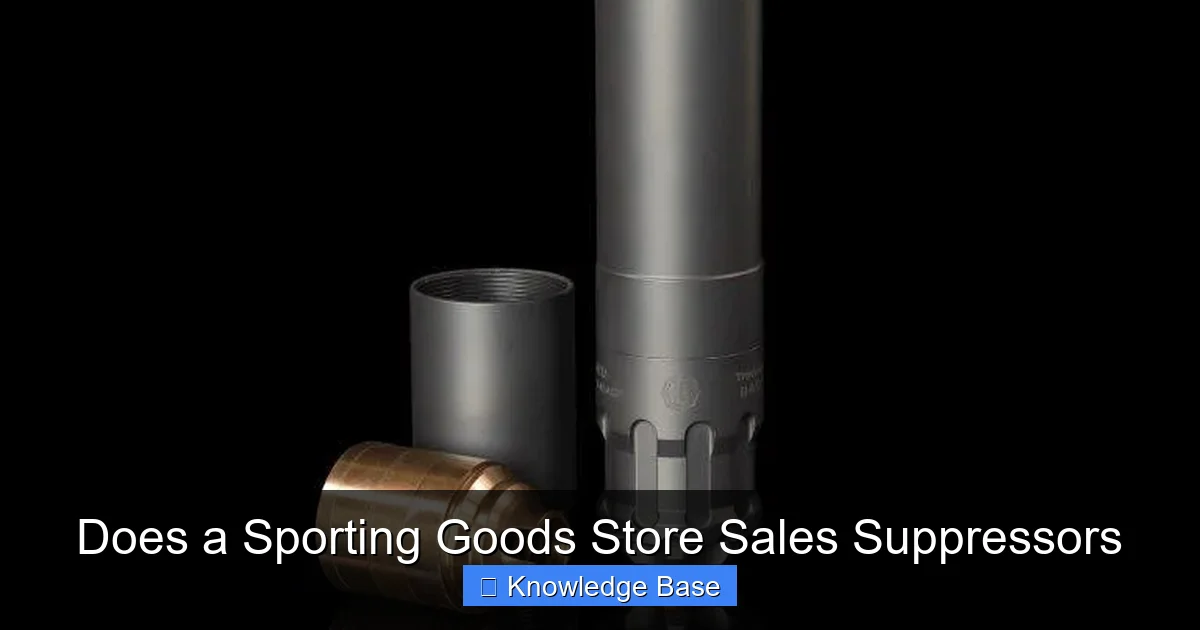
Visual guide about Does a Sporting Goods Store Sales Suppressors
Image source: cdn11.bigcommerce.com
Now to the million-dollar question: Can you walk into a sporting goods store and walk out with a suppressor? The answer is almost always no—especially at national chains.
Major retailers like Dick’s Sporting Goods, Academy Sports + Outdoors, and Bass Pro Shops focus on mainstream outdoor gear: fishing rods, camping equipment, hunting apparel, and firearms like rifles and shotguns. While they may sell firearms, they typically do not carry NFA-regulated items like suppressors, short-barreled rifles (SBRs), or machine guns. The reason? The regulatory burden is simply too high.
Selling a suppressor isn’t like selling a new shotgun. It requires the retailer to hold a Federal Firearms License (FFL) with a Special Occupational Tax (SOT) endorsement, specifically for NFA items. This adds complexity, cost, and liability. Most big-box sporting goods stores don’t want to deal with the paperwork, storage requirements, or risk of non-compliance. Even if they wanted to sell suppressors, the low volume of sales wouldn’t justify the overhead.
That said, there are exceptions. Some smaller, independently owned sporting goods stores—especially those that also function as full-service gun shops—may carry suppressors or offer them through special order. For example, a family-run outdoor store in rural Montana or Wyoming that caters to hunters might stock a few popular models like the SilencerCo Omega or Dead Air Sandman. But these are the exception, not the rule.
Even when a sporting goods store *does* have a suppressor in stock, you can’t just buy it off the shelf. The transaction must go through the same NFA process as any other purchase: Form 4 submission, tax stamp, background check, and CLEO sign-off. The store acts as a transfer point, not a direct seller.
Where Can You Actually Buy a Suppressor?
If sporting goods stores aren’t the answer, where *can* you legally buy a suppressor? The good news is there are several legitimate avenues—you just need to know where to look.
Specialty Gun Shops and FFL Dealers
Your best bet is a local gun shop that specializes in firearms and holds an FFL with NFA capabilities. These dealers are experienced in handling NFA transfers and can guide you through the entire process. Many even offer “suppressor libraries” or rental programs, allowing you to try before you buy.
When visiting a gun shop, ask if they are an SOT (Special Occupational Taxpayer) dealer. This designation means they’re authorized to manufacture, sell, or transfer NFA items. If they are, they can either sell you a suppressor directly or help you transfer one from another dealer.
Online Retailers with Local Pickup
You can absolutely buy a suppressor online—but you can’t have it shipped directly to your home. Instead, you purchase it from an online retailer (like Silencer Central, OpticsPlanet, or Brownells), and it’s shipped to a local FFL dealer of your choice. Once the ATF approves your Form 4, you pick it up in person.
This method gives you access to a wider selection and often better prices. Some online retailers even handle the entire paperwork process for you, including electronic fingerprinting and CLEO notification, which can speed things up.
Gun Shows and Private Sales
In some states, you may be able to purchase a suppressor at a gun show or through a private sale—but only if the seller is an FFL holder and the transfer goes through the proper NFA channels. Private sales between individuals are generally not allowed for NFA items unless facilitated by a dealer.
Manufacturer Direct (in Some Cases)
A few companies, like Silencer Central, allow you to complete the entire purchase and registration process online. They file your Form 4 directly with the ATF and ship the suppressor to your home once approved—no need to visit a dealer. This streamlined approach has become increasingly popular and is legal in most states.
The Legal Process: What It Takes to Own a Suppressor
Owning a suppressor isn’t just about finding a seller—it’s about navigating a complex legal process. Here’s a step-by-step breakdown of what you’ll need to do.
Step 1: Check Your State Laws
Before doing anything, verify that suppressors are legal in your state. As of 2024, suppressors are legal to own in 42 states. However, eight states ban them outright: California, Delaware, Hawaii, Illinois, Massachusetts, New Jersey, New York, and Rhode Island. Some cities and counties have additional restrictions, so always check local ordinances.
Step 2: Choose a Dealer
Find an FFL/SOT dealer near you who can handle NFA transfers. You can use the ATF’s FFL eZ Check tool to verify a dealer’s license status.
Step 3: Select Your Suppressor
Research models based on your needs. Are you hunting? Target shooting? Using a pistol or rifle? Popular brands include SilencerCo, Dead Air, Gemtech, and Rugged Suppressors. Consider factors like weight, caliber compatibility, and mounting system.
Step 4: Complete the Paperwork
You’ll need to fill out ATF Form 4 (Application for Tax Paid Transfer and Registration of Firearm). This form requires personal information, fingerprints, a passport-style photo, and CLEO certification. Some dealers offer electronic filing (eForm 4), which is faster than paper forms.
Step 5: Pay the $200 Tax Stamp
The tax stamp is a one-time fee paid to the ATF. It’s non-refundable, even if your application is denied.
Step 6: Wait for Approval
Processing times vary. As of 2024, eForm 4s take 6–12 months, while paper forms can take over a year. During this time, you cannot take possession of the suppressor.
Step 7: Pick Up Your Suppressor
Once approved, the dealer will notify you. You’ll go in, complete a final background check, and take ownership. Congratulations—you’re now a legal suppressor owner!
Why Don’t More Stores Sell Suppressors?
Given the growing popularity of suppressors, you might wonder why more retailers don’t jump on the bandwagon. The answer lies in a combination of legal, financial, and practical barriers.
First, the regulatory burden is immense. To sell NFA items, a store must pay an annual SOT fee (ranging from $500 to $5,000 depending on the class), maintain detailed records, and comply with strict storage and reporting requirements. For a store that sells thousands of fishing lures and hiking boots, this isn’t worth the hassle.
Second, the market is niche. While suppressor ownership has grown—over 2 million are registered with the ATF as of 2024—they’re still a small fraction of overall firearm sales. Most people buy a gun for self-defense or hunting, not for the added cost and complexity of a suppressor.
Third, liability is a major concern. If a suppressor is misused or stolen, the retailer could face legal consequences. Insurance costs for NFA inventory are also higher than for standard firearms.
Finally, public perception plays a role. Despite their safety benefits, suppressors still carry a “criminal” stigma in the eyes of many. Retailers may avoid stocking them to prevent controversy or negative publicity.
The Future of Suppressor Sales
The landscape is slowly changing. In recent years, there’s been a push to reform NFA laws. The Hearing Protection Act, introduced in multiple congressional sessions, aims to remove suppressors from NFA regulation and treat them like any other firearm accessory. If passed, this would make suppressors far more accessible—and likely lead to wider availability in sporting goods stores.
Additionally, public awareness is growing. Organizations like the American Suppressor Association (ASA) are working to educate lawmakers and the public about the safety and practical benefits of suppressors. As more people understand that suppressors are tools for hearing protection and responsible shooting, not weapons of stealth, attitudes are shifting.
Some retailers are already adapting. Cabela’s, for example, has begun offering suppressor transfers in select locations, partnering with local FFL dealers to facilitate the process. While they don’t stock them on shelves, they can help customers navigate the transfer.
Conclusion
So, does a sporting goods store sales suppressors? In most cases, no. Due to federal regulations, liability concerns, and low demand, mainstream sporting goods retailers don’t carry suppressors. However, that doesn’t mean you can’t own one. With the right knowledge and patience, you can legally purchase a suppressor through a specialty gun shop, online retailer, or manufacturer—provided you follow the NFA process.
The key is understanding the rules. Suppressors are not illegal, but they are heavily regulated. By checking your state laws, working with a licensed dealer, and completing the required paperwork, you can enjoy the benefits of reduced noise, improved accuracy, and better hearing protection.
As laws evolve and public perception shifts, we may see suppressors become more accessible in the future. But for now, if you’re serious about buying one, skip the big-box sporting goods store and head to a trusted firearms dealer instead. Your ears—and your shooting experience—will thank you.
Frequently Asked Questions
What is the difference between a suppressor and a silencer?
A suppressor is the correct technical term for the device that reduces gunshot noise. “Silencer” is a misnomer popularized by media—no legal suppressor can fully silence a firearm.
How much does a suppressor cost?
Suppressors typically range from $500 to $1,500, plus the $200 tax stamp and any dealer transfer fees.
Can I use a suppressor for hunting?
Yes, in most states where suppressors are legal, they are also allowed for hunting. They reduce noise pollution and protect hearing in the field.
Do suppressors require maintenance?
Yes, most suppressors need regular cleaning to remove carbon buildup and maintain performance. Follow the manufacturer’s guidelines.
Can I travel with a suppressor across state lines?
Yes, but you must notify the ATF in advance using Form 20 and ensure the suppressor is legal in the destination state.
What happens if my suppressor application is denied?
If denied, you will not receive the tax stamp refund. Common reasons include failed background checks or incomplete paperwork.