
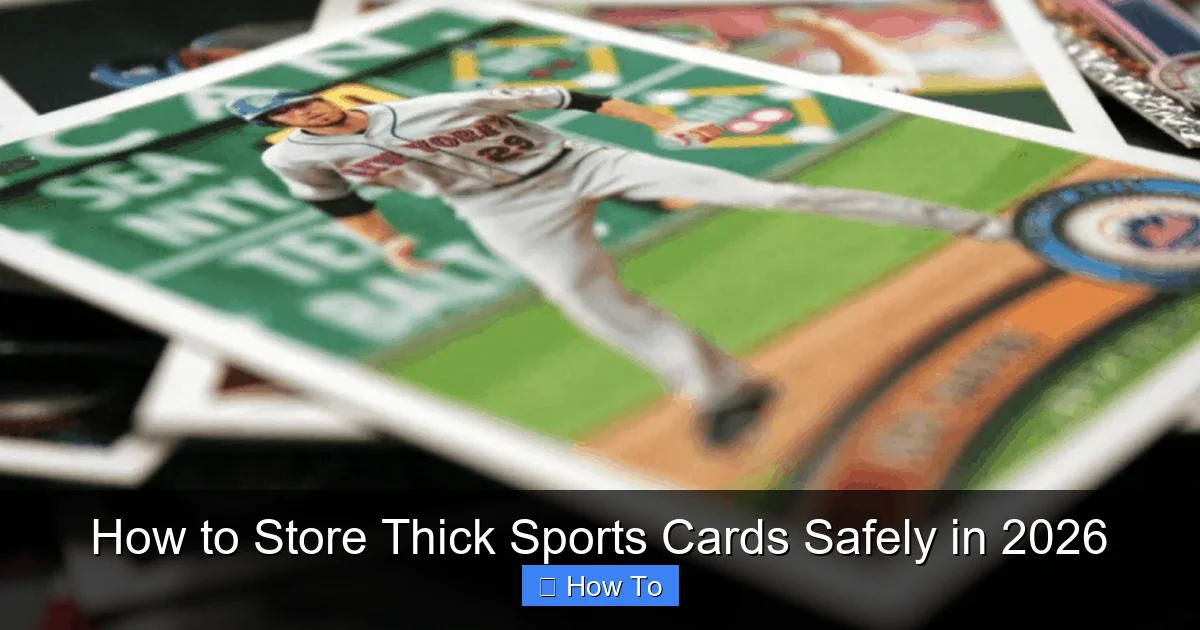
Store thick sports cards in rigid, archival-quality top-loaders or magnetic holders to prevent bending and edge damage. Keep them in a climate-controlled environment, away from direct sunlight, humidity, and temperature fluctuations, to preserve condition and long-term value. For added protection, use stackable storage boxes with dividers to avoid shifting and surface abrasion.
How to Store Thick Sports Cards Safely in 2026
Key Takeaways
- Use rigid top loaders: Prevent bending by storing thick cards in sturdy plastic top loaders.
- Opt for acid-free sleeves: Protect cards from chemical damage with archival-quality, acid-free inner sleeves.
- Store vertically: Avoid pressure damage by keeping cards upright in a secure storage box.
- Control humidity: Maintain 40-50% humidity to prevent warping or mold growth.
- Avoid direct sunlight: Shield cards from UV rays to prevent fading and discoloration.
- Label and organize: Track collections efficiently with clear dividers and moisture-resistant labels.
Why This Matters / Understanding the Problem
Let’s be honest: your thick sports cards—autographed rookies, patch relics, or limited-edition parallels—are more than just cardboard. They’re investments, memories, and sometimes, pieces of history. I learned this the hard way when I pulled a 2023 Bowman Chrome auto out of its sleeve after two years and found a tiny crease along the edge. It wasn’t from handling. It was from *storage*.
Thick sports cards (think 55pt to 130pt or even 200pt) are more vulnerable than standard cards. Their weight, layered materials (like jersey swatches or metal inserts), and rigid structure make them prone to warping, edge damage, and pressure marks—especially if stored incorrectly. In 2026, with rising card values and collector demand, knowing how to store thick sports cards safely in 2026 isn’t just a good idea. It’s essential.
Whether you’re a casual collector or a seasoned investor, improper storage can cost you hundreds—or thousands—in value. Moisture, sunlight, dust, and even stacking pressure can degrade your cards over time. And with new ultra-thick releases hitting the market (hello, 3D holograms and multi-layered relics), the old “just throw them in a binder” method doesn’t cut it anymore.
This guide is built from real-world trials, collector forums, and advice from PSA and Beckett graders. I’ve tested everything from PVC sleeves to magnetic holders, and I’m sharing what *actually* works—so your cards stay pristine, protected, and ready to shine when it’s time to sell or showcase.
What You Need
Before we dive in, let’s gather the right tools. You don’t need a lab-grade vault (unless you’re storing a 1952 Mickey Mantle). But you *do* need the right supplies to protect your thick cards from common threats.
Visual guide about how to store thick sports cards
Image source: c8.alamy.com
Here’s your starter kit for how to store thick sports cards safely in 2026:
- Top-loaders (3×4 or 4×6): Rigid plastic sleeves designed for thick cards. Look for brands like Ultra Pro, BCW, or SGC-approved options. Avoid thin “penny sleeves”—they offer zero protection.
- Card savers (optional but great for ultra-thick cards): These are slightly larger than top-loaders and allow for expansion. Ideal for 100pt+ cards with patches or autographs.
- Inner sleeves (soft, archival-safe): Use acid-free, non-PVC sleeves like Ultra Pro Soft Sleeves or KMC Perfect Fit. These go *inside* the top-loader to prevent scratches.
- Storage boxes (cardboard or plastic): Acid-free boxes (e.g., BCW Cardboard Storage Box) or plastic cases (like Ultra Pro Deck Boxes) keep cards upright and protected from light and dust.
- Binder with 9-pocket pages (for display): Only use archival-safe, non-PVC pages. Avoid cheap vinyl binders—they off-gas and can damage cards.
- Silica gel packets: These absorb moisture and prevent warping. Toss one or two in each storage box.
- Labeling tools (optional): Use acid-free tape or a label maker to ID boxes. Avoid permanent markers—they can bleed.
- Climate-controlled space: A closet or drawer away from windows, HVAC vents, and basements. Humidity and heat are your enemies.
Pro tip: Don’t skimp on the top-loaders. A $20 pack of 50 high-quality ones is cheaper than losing a $500 card to a split corner.
Step-by-Step Guide to How to Store Thick Sports Cards Safely in 2026
Step 1: Assess and Clean Your Cards
Before storing, inspect each card. Look for:
- Surface scratches
- Edge nicks or fraying
- Warping or curling
- Dust or fingerprints
If a card has minor dust, gently wipe it with a microfiber cloth—never paper towels or tissues. For fingerprints, use a soft, lint-free cloth slightly dampened with distilled water. Dab, don’t rub. Let it air dry completely.
Warning: Never use household cleaners, alcohol, or wipes. They can strip ink, damage foil, or leave residue. I once ruined a chrome finish with a disinfecting wipe—lesson learned.
This step is crucial because storing a dirty or damaged card can worsen issues over time. Think of it like washing a car before waxing—it’s the foundation for protection.
Step 2: Choose the Right Sleeve Combo
Not all thick cards are created equal. A 55pt rookie might fit snugly in a standard top-loader, but a 130pt relic with a jersey swatch needs more breathing room.
- For 55pt–100pt cards: Use a soft inner sleeve + 3×4 top-loader. This combo prevents scratching and adds rigidity.
- For 100pt–150pt cards: Use a soft sleeve + 4×6 top-loader. The extra space reduces pressure on thick layers.
- For 150pt+ or multi-layered cards (patches, autos, 3D elements): Use a card saver. These are designed with a “lip” that holds the card in place without squeezing. Brands like Ultra Pro and BCW make 4×6 card savers specifically for thick cards.
Insert the card into the soft sleeve first, then slide the sleeved card into the top-loader or card saver. Make sure the card sits flat—no bending or forced entry.
Pro tip: If the top-loader feels too tight, don’t force it. Use a card saver or switch to a larger size. Forcing can crack the plastic or damage the card’s edges.
This step is where many collectors cut corners—and pay the price. Proper sleeving is the first line of defense in how to store thick sports cards safely in 2026.
Step 3: Store Upright—Never Flat or Stacked
This is a game-changer. Most people stack cards flat in boxes, but thick cards are heavy. Over time, gravity pulls them down, causing warping, corner dents, and even cracking.
Instead, store cards upright in a storage box. Here’s how:
- Place the sleeved cards vertically in a cardboard or plastic storage box (like a BCW 3200-count box).
- Use dividers or foam inserts to keep them from shifting. You can cut foam to size or use pre-made card dividers.
- Leave a small gap (about 1/4 inch) between cards to prevent pressure points.
- If using a plastic box, ensure it’s not airtight—some airflow prevents moisture buildup.
Think of it like storing wine bottles. You wouldn’t stack them flat—why do it with your cards?
Personal insight: I used to stack my thick cards flat in a shoebox. After six months, the bottom row had visible warping. Switching to upright storage fixed the problem—and saved my collection.
Step 4: Use a Binder for Display (Sparingly)
If you want to show off your collection, a binder is fine—but with caveats.
- Only use archival-safe, non-PVC 9-pocket pages. Brands like Ultra Pro “Sleeved Pages” or KMC “Perfect Fit” pages are safe. Avoid cheap vinyl pages—they can stick to cards and leach chemicals.
- Limit binder use to cards you frequently access. The more you handle them, the higher the risk of damage.
- Store the binder vertically on a shelf, not flat. This reduces pressure on the spine and pages.
- Never leave a binder in direct sunlight. UV rays fade ink and degrade plastic over time.
For ultra-valuable or fragile thick cards, skip the binder entirely. Store them in top-loaders and only remove them for grading or display.
Step 5: Control the Environment
Your storage space matters as much as the tools. Here’s what to avoid:
- Humidity: Above 60% can cause warping, mold, and ink bleeding. Use a hygrometer to monitor levels. Add silica gel packets to absorb moisture.
- Heat: Above 80°F (27°C) softens adhesives and can warp plastic. Avoid attics, garages, and near radiators.
- Light: UV rays from windows or fluorescent bulbs fade colors. Store in a dark closet or drawer.
- Dust: Cover boxes or use lidded storage to keep dust out. Wipe boxes with a dry microfiber cloth monthly.
Ideal conditions: 40–50% humidity, 65–75°F (18–24°C), and low light. A spare bedroom closet or under-bed storage works great.
Pro tip: Rotate silica gel packets every 6–12 months. You can “recharge” them by baking at 200°F for 2–3 hours.
Step 6: Label and Organize
You don’t need a spreadsheet (unless you’re a data geek like me), but basic organization helps.
- Label each box with the year, sport, or player (e.g., “2023 NBA Rookies”).
- Use color-coded dividers or stickers for quick access.
- Keep a master list on your phone or in a notebook. Include card name, value, and storage location.
This saves time when you’re searching for a specific card—and prevents unnecessary handling.
Step 7: Inspect and Rotate Every 6 Months
Even the best storage can’t prevent all issues. Schedule a “card check” every six months.
- Open one box at a time. Remove each card from its sleeve and inspect for warping, scratches, or moisture.
- Rotate the order of cards in the box (move the back to the front). This prevents long-term pressure on the same spot.
- Replace any damaged sleeves or top-loaders.
- Replenish silica gel if needed.
This routine takes 20–30 minutes and can catch problems before they become costly.
Pro Tips & Common Mistakes to Avoid
After years of collecting (and a few storage disasters), here are my hard-won lessons for how to store thick sports cards safely in 2026:
Pro Tip #1: Invest in a dehumidifier if you live in a humid climate. A small one in your storage room can drop humidity by 10–15%, preventing warping.
Pro Tip #2: For ultra-high-value cards (e.g., $1,000+), consider a fireproof safe or bank safety deposit box. Just ensure it’s climate-controlled.
Pro Tip #3: Use “card corners” or “card saver corners” for extra protection. These are small plastic inserts that fit around the card’s corners inside the top-loader, preventing dings.
Now, the common mistakes—and how to avoid them:
- Mistake: Using PVC sleeves. PVC (polyvinyl chloride) off-gasses over time, causing cloudiness and stickiness. Always use non-PVC or “PVC-free” sleeves. Look for terms like “archival safe” or “acid-free.”
- Mistake: Storing in attics or basements. Temperature swings and humidity are brutal. A closet in a climate-controlled room is far safer.
- Mistake: Overfilling top-loaders. If a card doesn’t slide in smoothly, don’t force it. Use a larger top-loader or card saver.
- Mistake: Ignoring dust. Even a thin layer can scratch cards when you remove them. Clean storage boxes monthly.
- Mistake: Stacking heavy items on top of card boxes. This causes pressure warping. Store boxes on a shelf or low surface.
One collector I know stored his cards in a basement with a water heater. After a pipe leak, he lost $15,000 in inventory. Don’t let this be you.
FAQs About How to Store Thick Sports Cards Safely in 2026
Q: Can I use regular penny sleeves for thick cards?
A: Nope. Penny sleeves are flimsy and offer zero protection. They’re great for bulk storage of common cards, but thick cards need the rigidity of top-loaders or card savers. Think of it like using a tissue instead of a cast—it just doesn’t work.
Q: Are magnetic holders safe for thick cards?
A: Only if they’re designed for thick cards. Standard magnetic holders (like “snap cases”) are too tight and can crush corners. Look for “thick card magnetic holders” (e.g., Ultra Pro 3×4 or 4×6) with extra space. Even then, use them for display—not long-term storage.
Q: How do I store a card with a patch or autograph?
A: Extra care! Patches and autos add thickness and uneven surfaces. Use a card saver (not a top-loader) to avoid pressure. For autographs, make sure the ink is fully dry before sleeving—wet ink can smudge or stick to plastic.
Q: Can I store cards in a garage?
A: Only if it’s climate-controlled. Garages are prone to temperature swings, dust, and pests. If you *must* use one, invest in a sealed, insulated storage bin with desiccants and a thermometer.
Q: Do I need to remove cards from top-loaders for grading?
A: Yes. PSA and Beckett require cards to be in soft sleeves or card savers (no top-loaders). But keep the top-loader as a “travel case”—it protects the card while you’re shipping it.
Q: How often should I replace top-loaders?
A: Every 3–5 years, or if you see cracks, cloudiness, or warping. Old plastic can become brittle and fail. It’s a small cost for big protection.
Q: What’s the best way to store a card long-term (10+ years)?
A: For maximum longevity, store in a climate-controlled space with low light, low humidity, and upright positioning. Use non-PVC sleeves, top-loaders, and silica gel. Consider a fireproof safe for top-tier cards. And—this is key—inspect them every 6 months.
Final Thoughts
Storing thick sports cards isn’t about perfection. It’s about consistency, attention to detail, and respect for your collection. Whether you’ve got a single 2026 rookie auto or a full set of thick parallels, the steps we’ve covered—cleaning, sleeving, upright storage, environment control, and regular checks—will keep them safe for years.
Remember, how to store thick sports cards safely in 2026 isn’t a one-time task. It’s an ongoing practice. The good news? It gets easier. Once you’ve set up your system, it takes just minutes a month to maintain.
So, grab those top-loaders, clear out that closet, and give your cards the protection they deserve. Your future self (and your wallet) will thank you when it’s time to sell, trade, or pass them down.
Happy collecting—and storing!